
Exploring Beautiful Normandy, France: Going Beyond the D-Day Beaches
Normandy France is often synonymous with the D-Day beaches.
And for good reason.
But this remarkable region offers far more than its powerful World War II history.
In this episode, I invite you to look beyond the shoreline and discover the quieter, richer layers of Normandy that many travelers miss.
Alongside reflections on visiting the D-Day beaches — including a deeply moving guided tour that brings the history to life with care, context, and respect — I also share why Normandy’s culture and landscapes left such a lasting impression on me.
From creamy local cheeses and crisp apples to coastal views and rural countryside dotted with small towns, Normandy is a place that rewards those who slow down and wander a little further.
This episode is about honoring history while also embracing the present-day heart of the region — its people, its flavors, and its sense of place.
If you’re planning a trip to France, or simply curious about what lies beyond the most well-known sites, this episode offers inspiration for traveling through Normandy in a more meaningful, connected way.
Want to chat about Normandy, France?
Email me at Lynne@WanderYourWay.com
In this episode:
1:10: Intro & Updates
6:08: Intro to Normandy France
6:34: Placing Normandy France on the map
8:36: Food of Normandy
12:16: Places to visit and stay
14:59: D-Day Beaches & surrounding areas
24:49: Gold Beach & British War Memorial
30:17: Moving inland: Bayeux, Espins, Clécy
43:40: Falaise
53:06: Final thoughts on Normandy
56:57: Listener review + Wrapping it up

Exploring Beautiful Normandy, France: Going Beyond the D-Day Beaches
Normandy, France has been on my wish list for a long time.
And if you’re like most travelers, there’s a good chance it’s been on yours too — for one main reason: the D-Day beaches.
But here’s the thing… Normandy is so much more than the beaches (as meaningful and essential as they are).
It’s a region that surprised me in the best way — beautiful coastline, rolling countryside, charming towns, tasty food and a slower pace that feels like a deep exhale.
So in this post, I’m sharing what I loved about Normandy.
The history, of course.
But also the flavors, the inland villages and a couple of spots that became personal favorites.
Where is Normandy France?
Normandy sits in northwestern France, with a long stretch of coastline along the English Channel.
It is northwest of Paris and close enough to add to a visit to Paris.
But Normandy is different enough to feel like a completely different France.
It’s not a region of big, flashy cities.
Instead it’s known for coastal towns, rural landscapes, farmland and small cities/large towns that make great bases for exploring.
Let’s talk Normandy food
I’m starting with food because, well, it’s just where my head went first.
With the coastline, you’ll find plenty of fresh seafood — even inland because it doesn’t have to travel far.
The region is also full of farms — many dairy farms — which means you’re in for some seriously good dairy products such as milk, yogurt, butter and cheese (which we’ll get to).
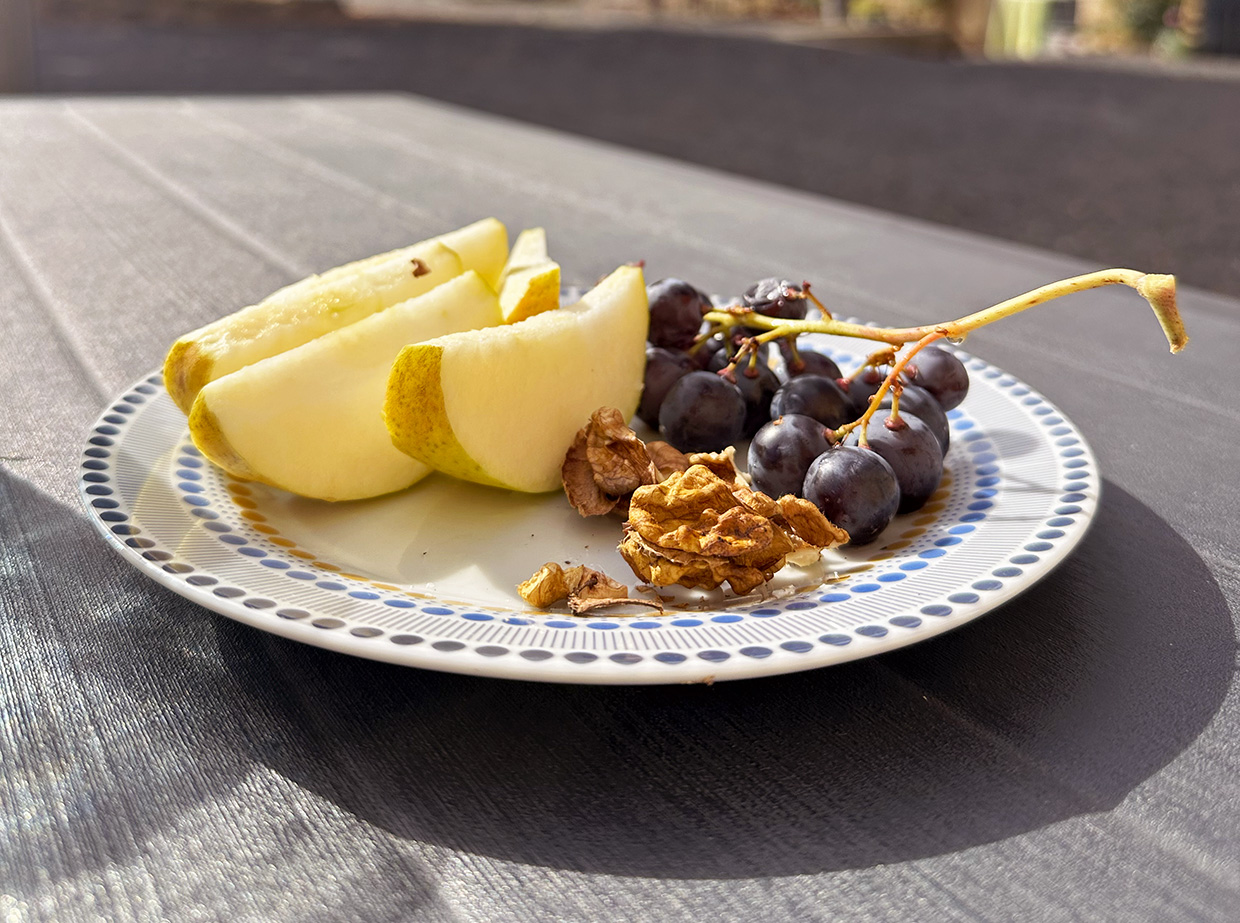
And there are LOTS of apples.
Sooo many apples.
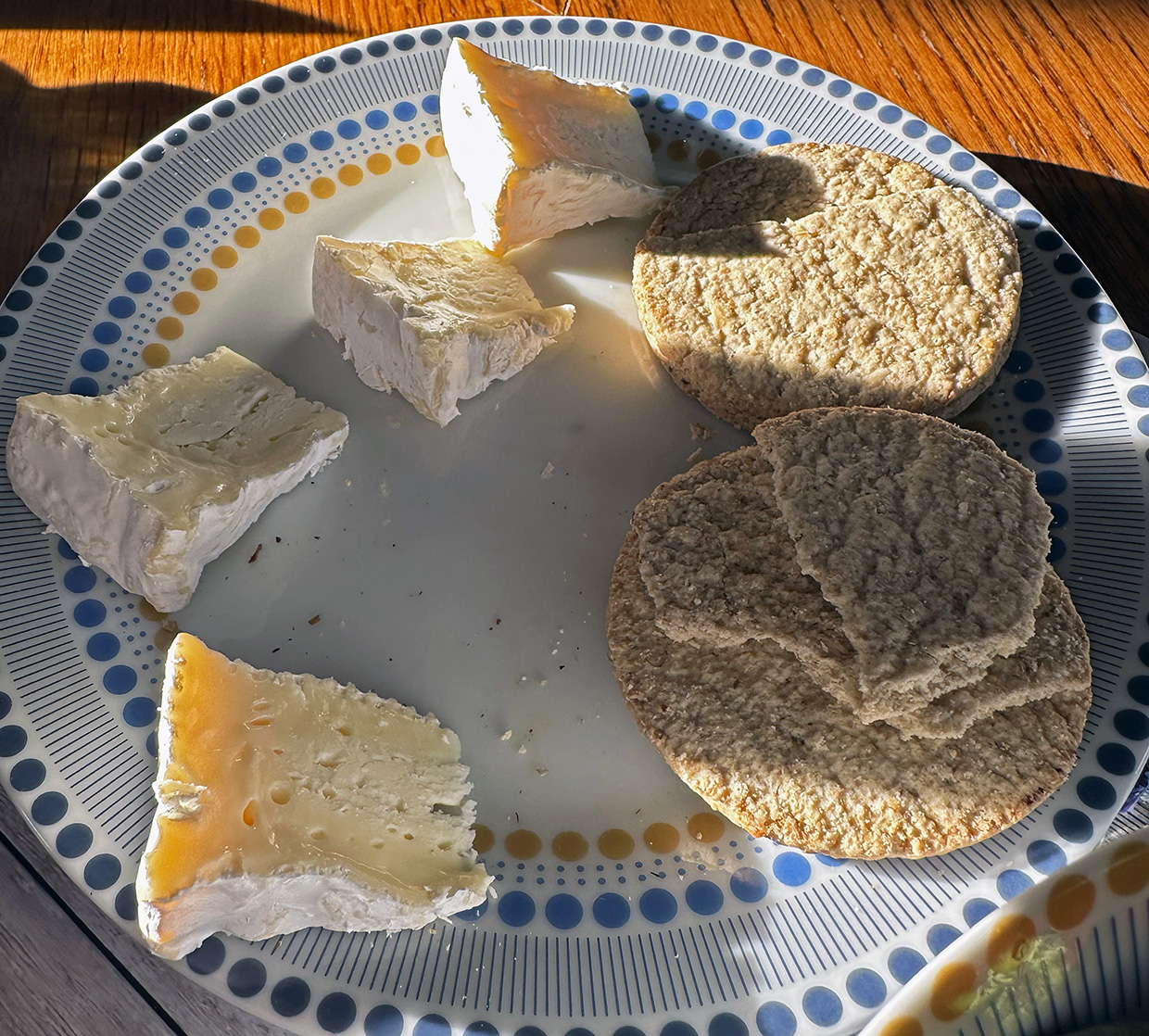
The famous cheeses of Normandy
Normandy is home to several classic cheeses, including:
-
Camembert (the one everyone knows and the one I ate a lot of)
-
Neufchâtel (soft and creamy, often easy to find)
-
Livarot
-
Pont-l’Évêque (which I cannot pronounce)
If you love food experiences, Normandy is a great place for this.
You can visit a small producer or artisan shop, sample cheeses and cider at a market or even explore an orchard/cidery.
Apples are everywhere (especially in October)
I visited in early October, and apples were everywhere.
Fresh apples, apple desserts, cider, hard cider… you name it.
If you’re even slightly into apples, Normandy will happily enable you.
The Normandy coastline
Along the coast you’ll find a string of towns that make good bases — especially if your trip is focused on the D-Day sites and seaside scenery.
Some of the names you’ll see include places like Cherbourg, Honfleur, Deauville/Trouville, Cabourg, Le Havre, and Étretat.
And then, of course, you have the famous D-Day landing beaches:
- Utah Beach (American)
- Omaha Beach (American)
- Gold Beach (British)
- Juno Beach (Canadian)
- Sword Beach (British)
If you want a “home base” with a bit more city energy, you could also consider Caen, Rouen or Alençon.
It’s up to you, of course.
But I believe Normandy’s magic is in the smaller places.
Visiting the D-Day beaches
For history lovers—especially WWII history buffs—Normandy is a must.
And even if you’re not a hardcore history person, this is one of those places where the weight of the story is impossible to ignore.
Take a tour (at least once)
Yes, you can visit the beaches on your own.
But I strongly recommend doing a guided tour for at least one section because a great guide makes the history real in a way a signboard never will.
I did a half-day tour with Overlord Tours (many tours depart from Bayeux), and it was excellent.
The guides were locals with personal family connections to the region’s history
And they brought everything to life with detail and respect.
My Overlord Tour stops
On my tour, we visited:
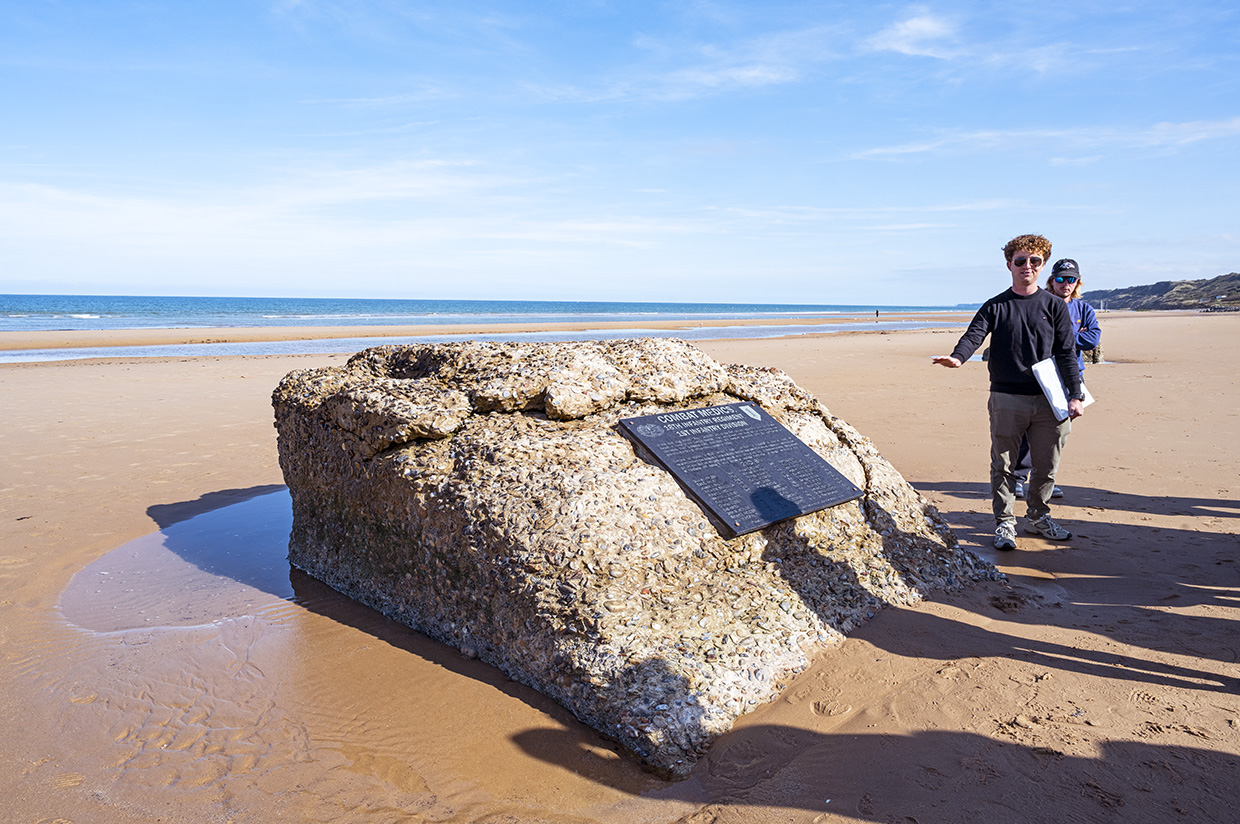
- Omaha Beach
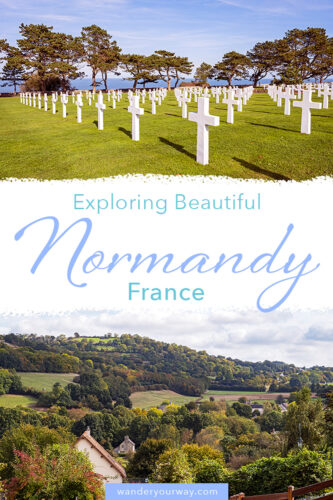
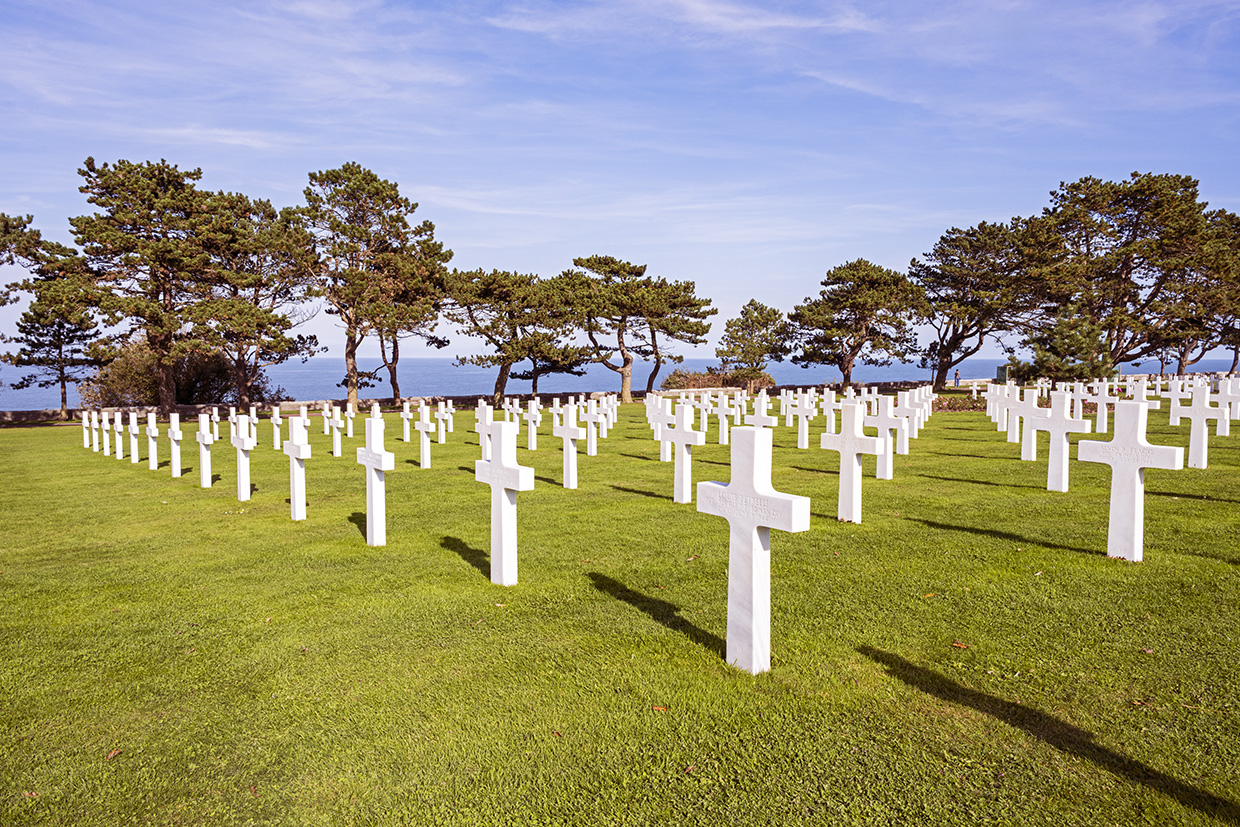
- the American Cemetery
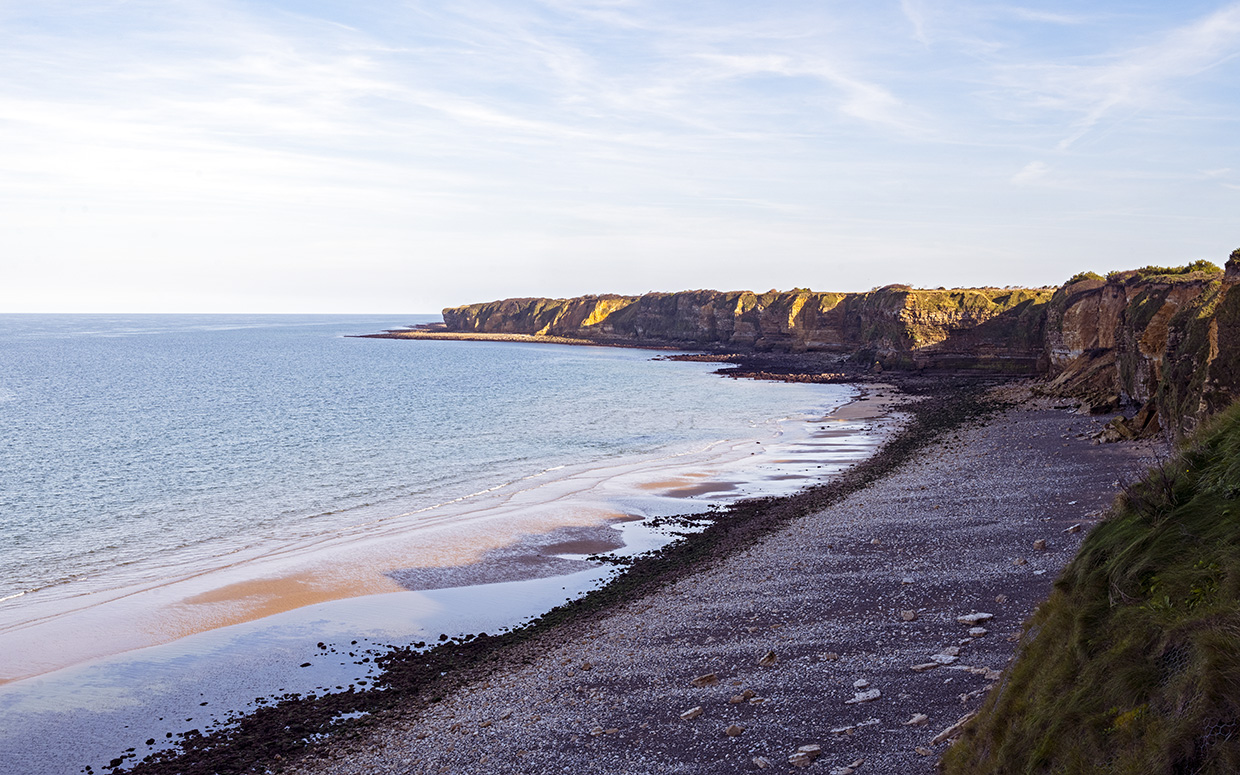
- Pointe du Hoc
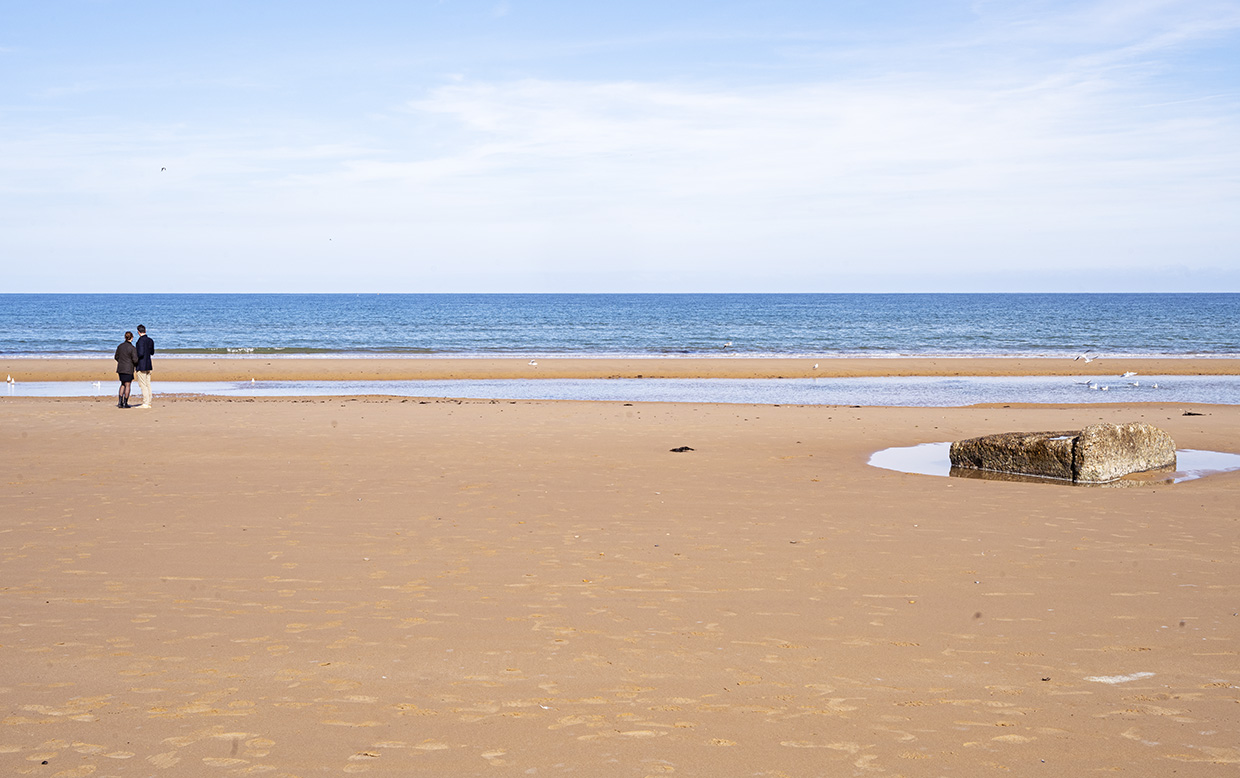
Standing on Omaha Beach is a lot to process.
It’s a beautiful stretch of sand.
And that’s part of what makes it feel surreal.
People walk dogs.
Kids play.
Families stroll.
But then you remember: this is exactly what so many people fought for.
Life continuing.
Joy returning.
Freedom restored.
Go at low tide
Here’s a practical tip that makes a big difference — try to visit the beaches at low tide.
At low tide, you can walk farther out and see more of the remnants and structures.
When the tide is high, some of what makes the beaches so visually striking disappears under the water.
I accidentally timed my tour perfectly (low tide in the afternoon) and it made the experience far more impactful.
Gold Beach on my own (and why I loved it)
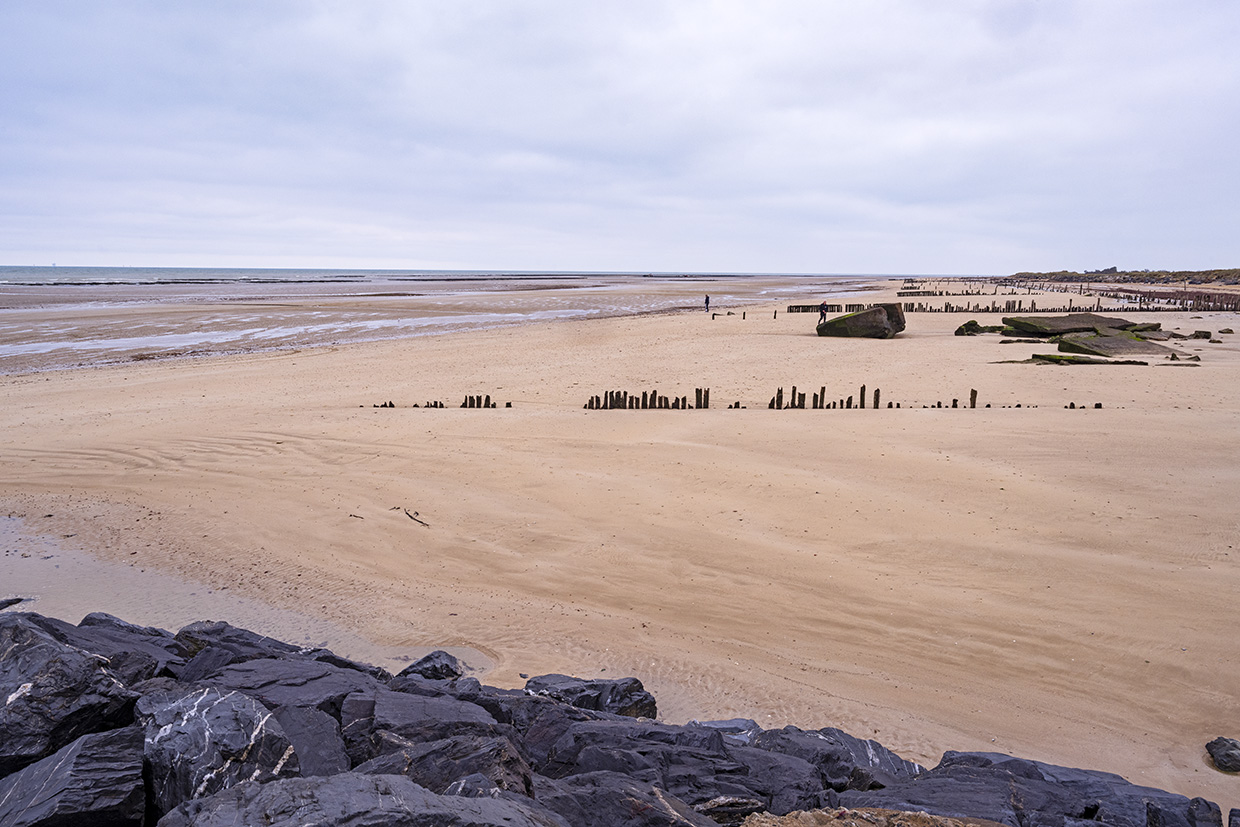
A few days after my tour, I visited Gold Beach on my own.
And I’m really glad I did.
I timed it so I would arrive at low tide.
At low tide, you can see remnants in the water and in the sand from the wartime engineering efforts — structures that are still there, still visible and treated with reverence.
It’s one of the places where the past feels unusually close.
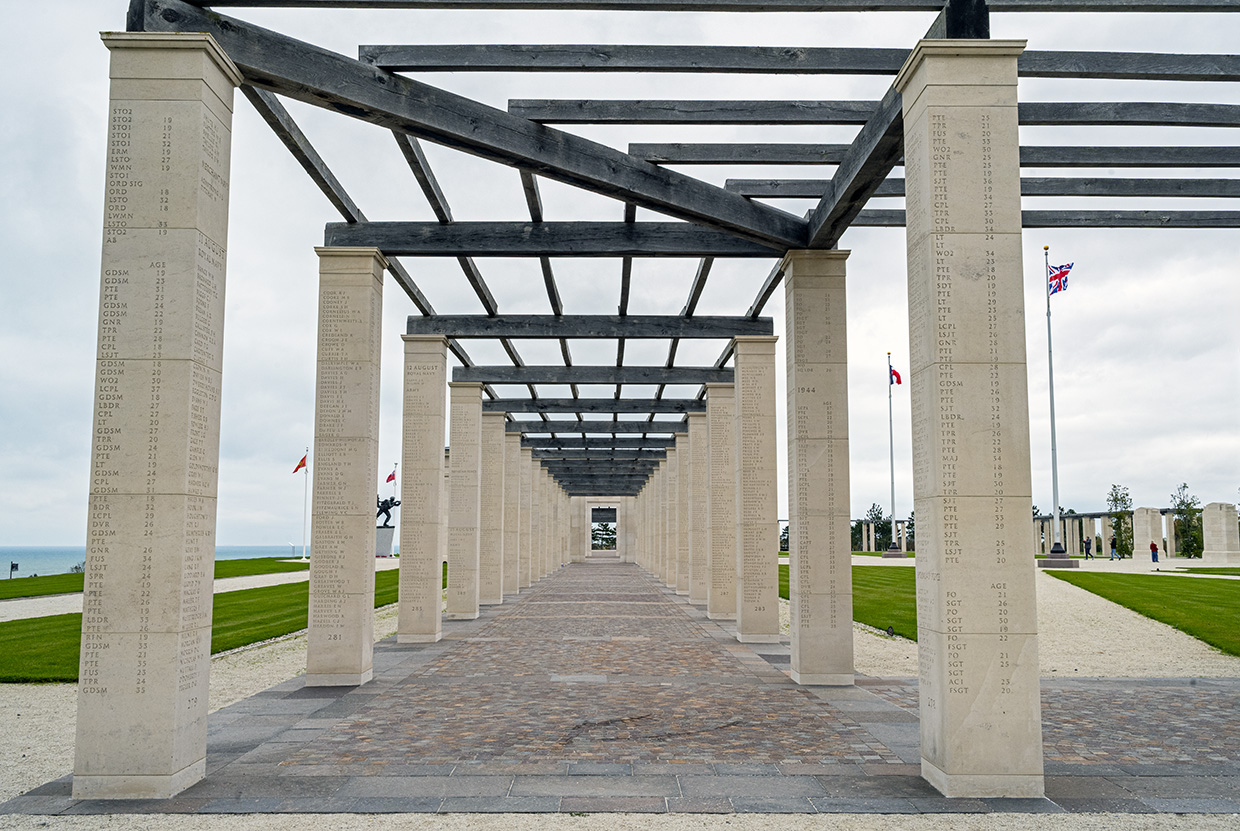
After walking the beach, I visited the British Normandy Memorial.
Wow!
It’s not a cemetery like the American one.
It’s more a sweeping, beautifully designed memorial space with quotes and interpretation that really stayed with me.
Even if you’re American (or any other nationality), don’t skip it.
It’s powerful.

Bayeux
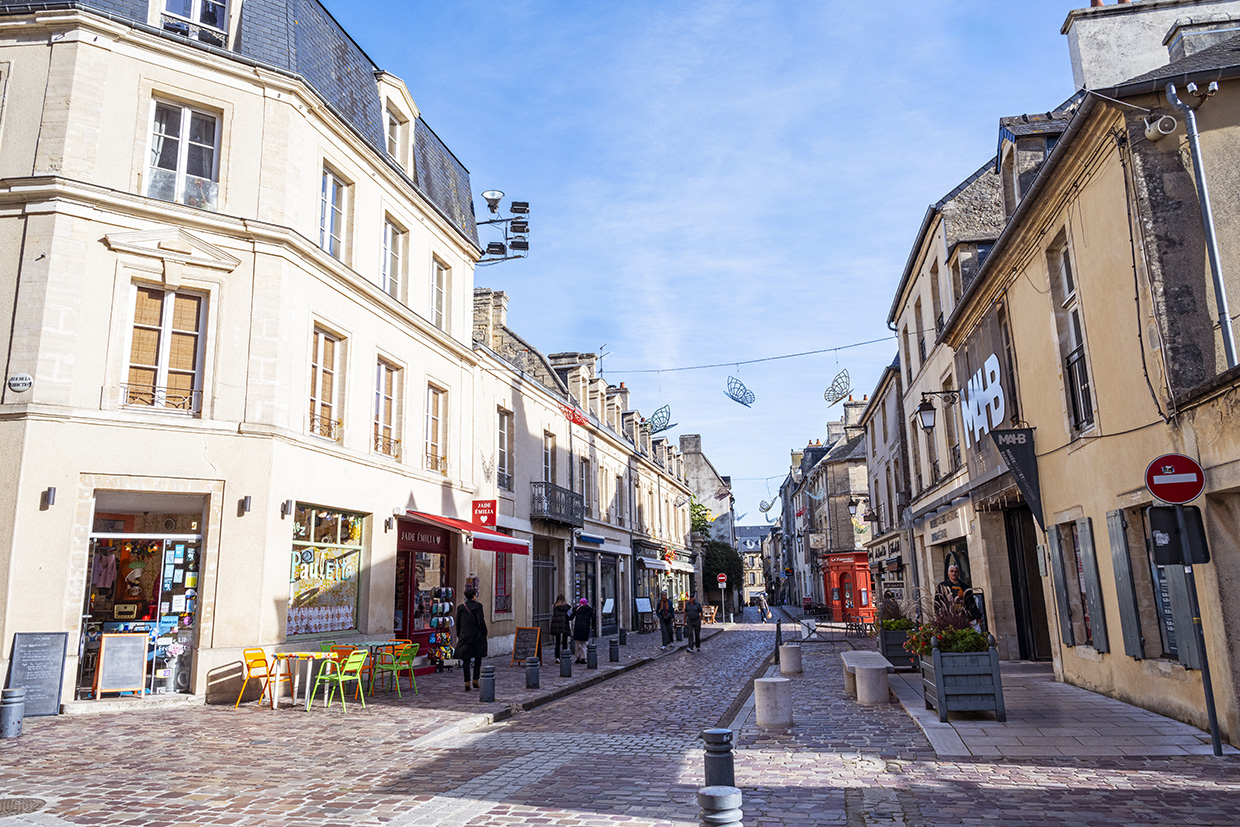
Many D-Day tours start in Bayeux and many folks choose to stay here.
It’s a great location, central enough to reach multiple sites
And it’s a lovely town.
Bayeux is also known for the Bayeux Tapestry, though the museum has been undergoing renovations (so check current status before you go).
Even without the tapestry, Bayeux is worth spending some time in.
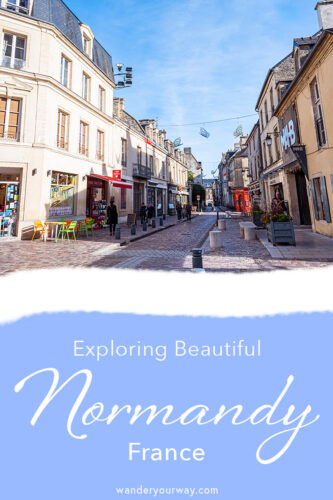
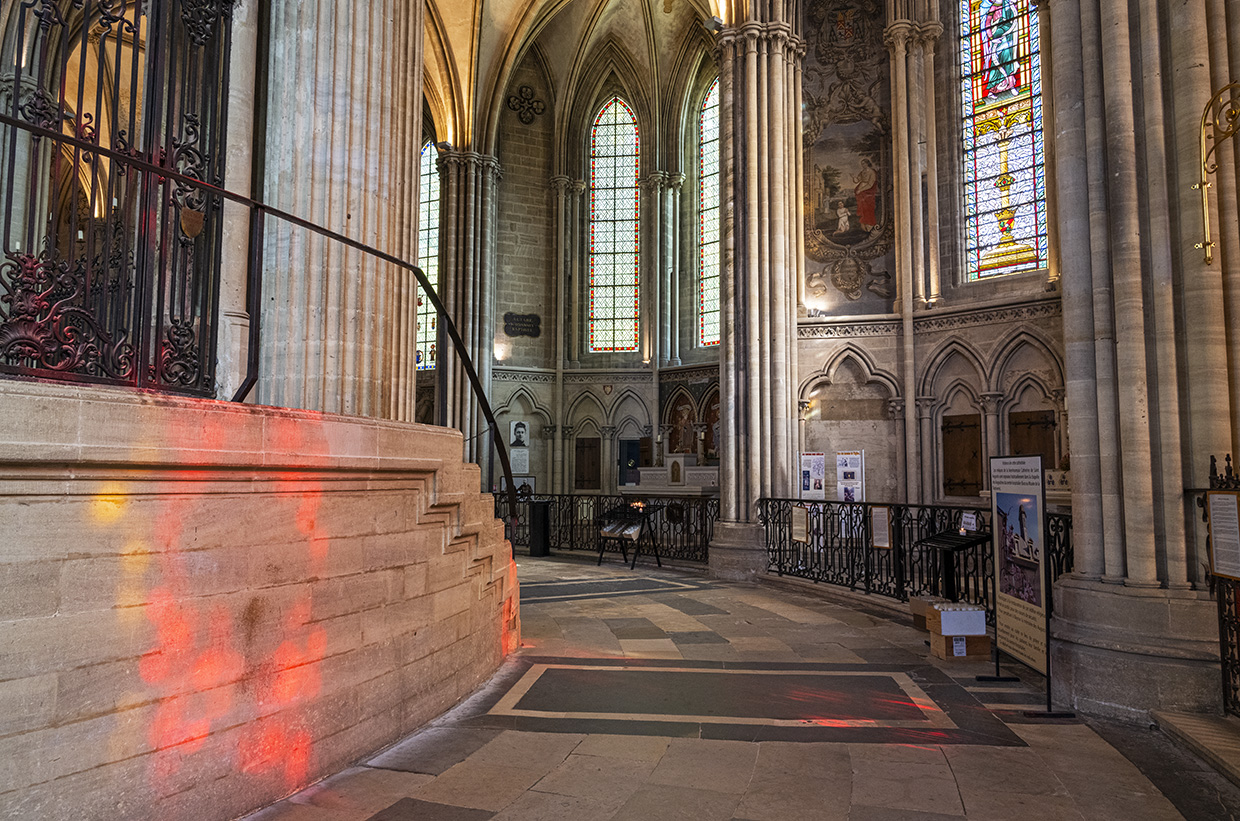
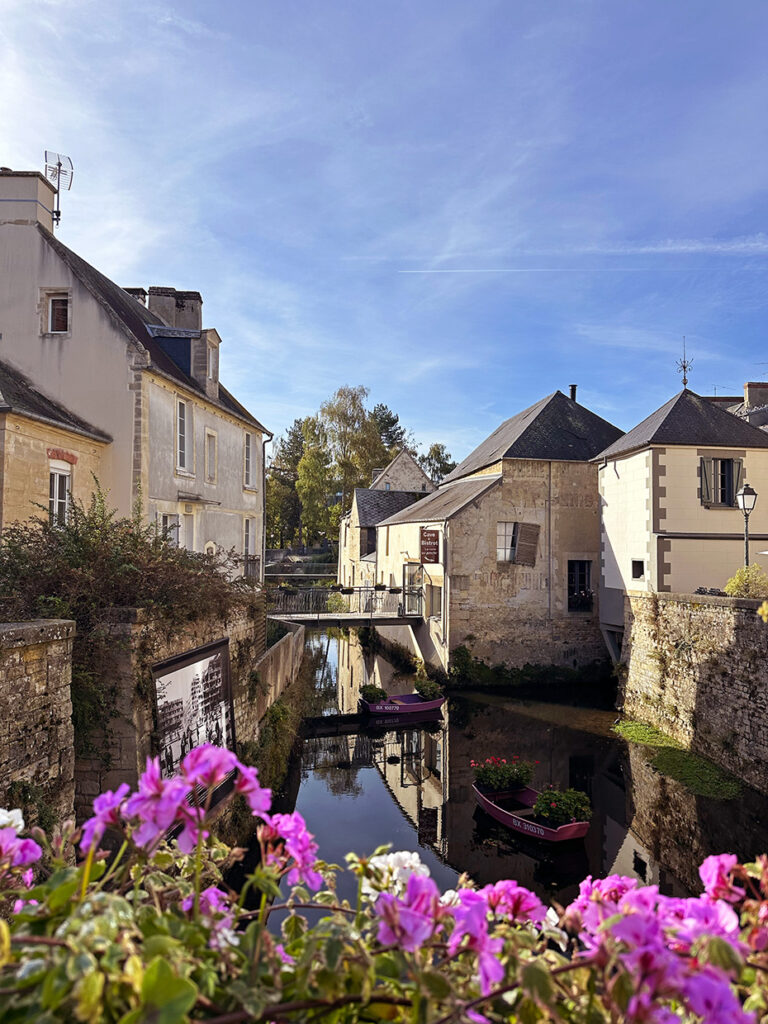
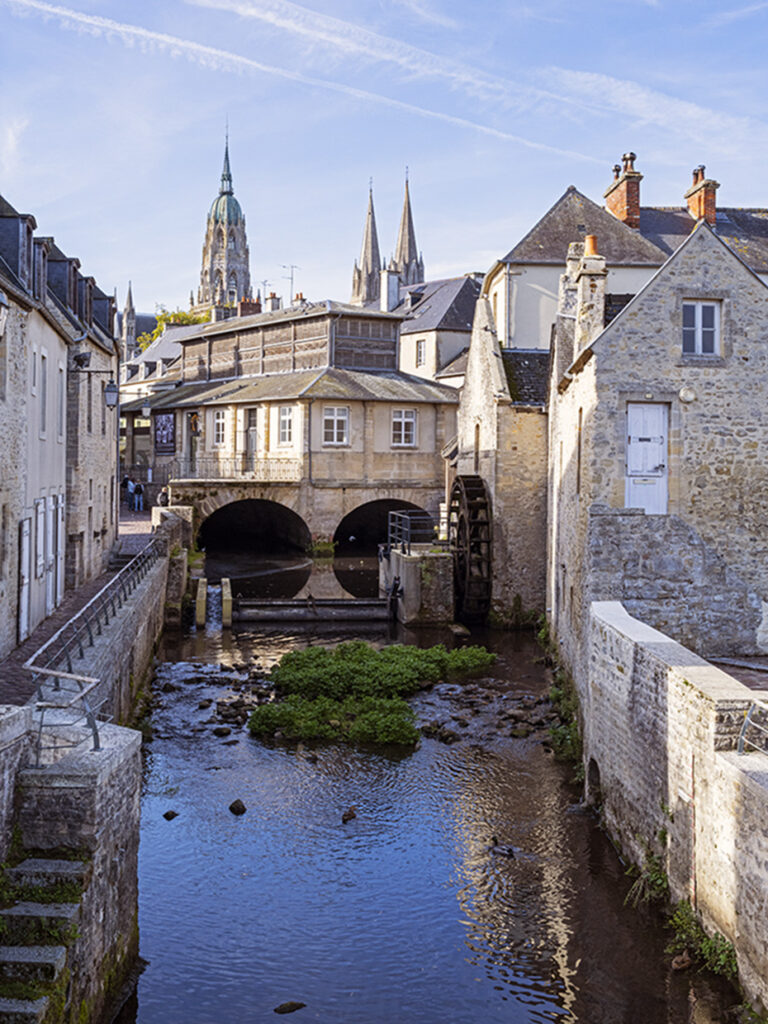
There are charming streets and canal-like waterways, plenty of cafés and shops and a stunning cathedral you won’t want to miss.
It’s also a town that largely escaped WWII destruction, which makes its historic center especially intact.
Don’t skip inland Normandy
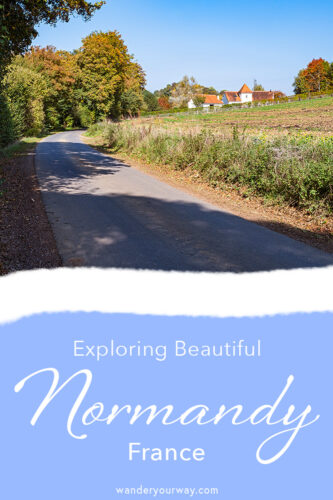
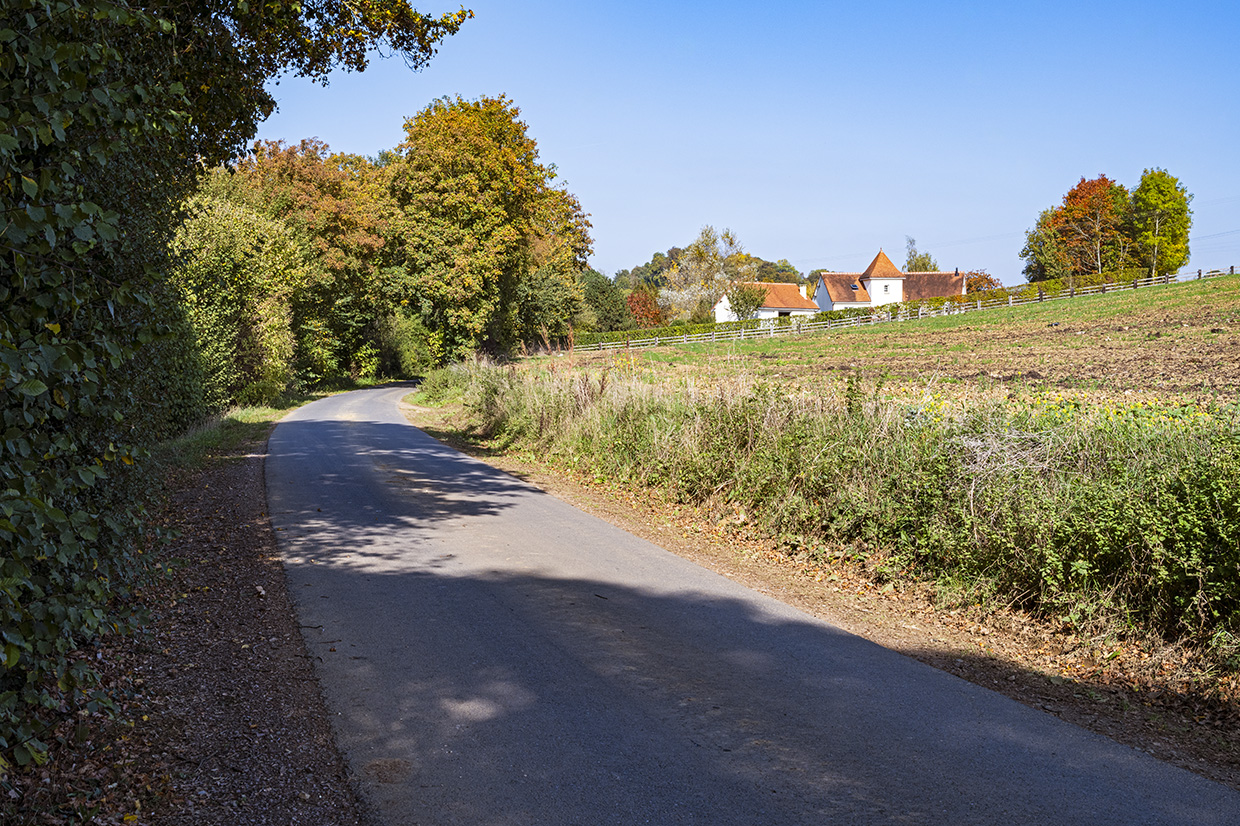
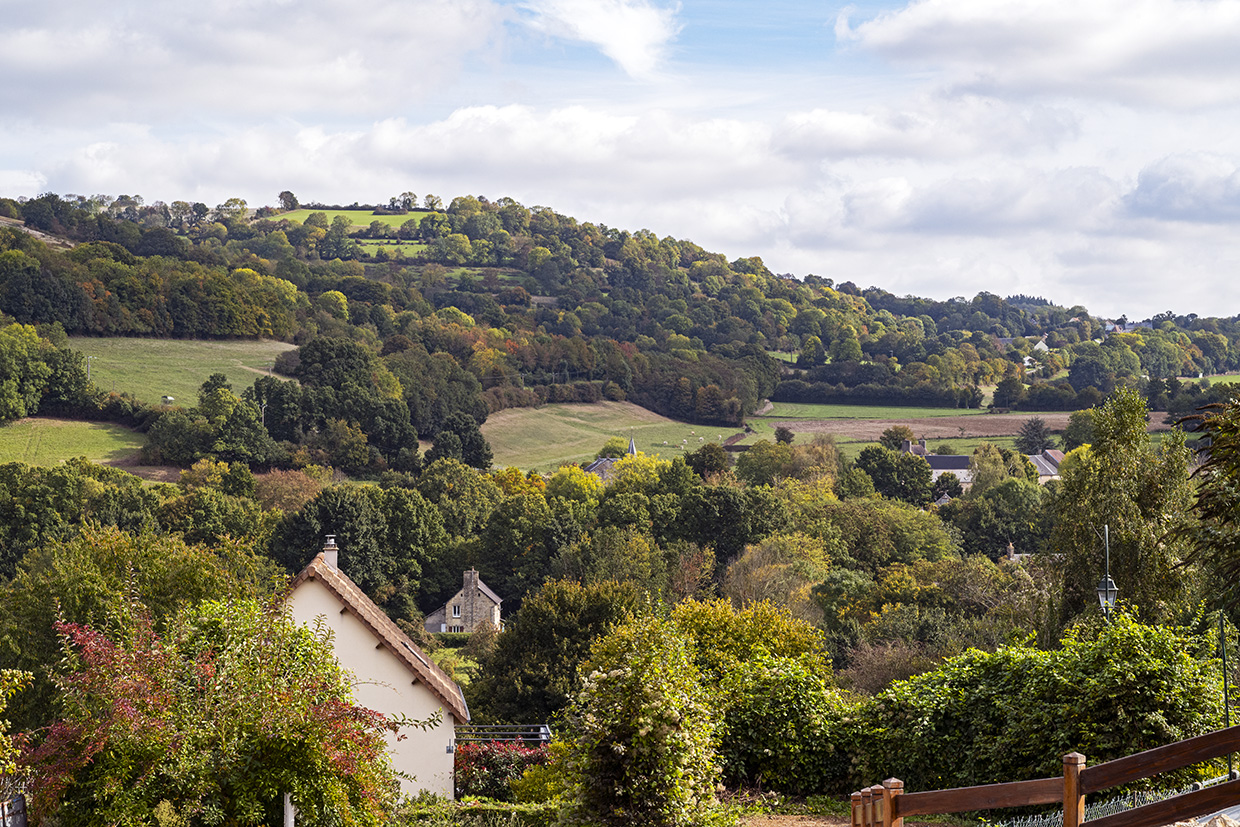
Now for the part I really want you to hear: Normandy’s interior is stunning.
Rolling hills.
Farms.
Trees.
Rivers and rural lanes.
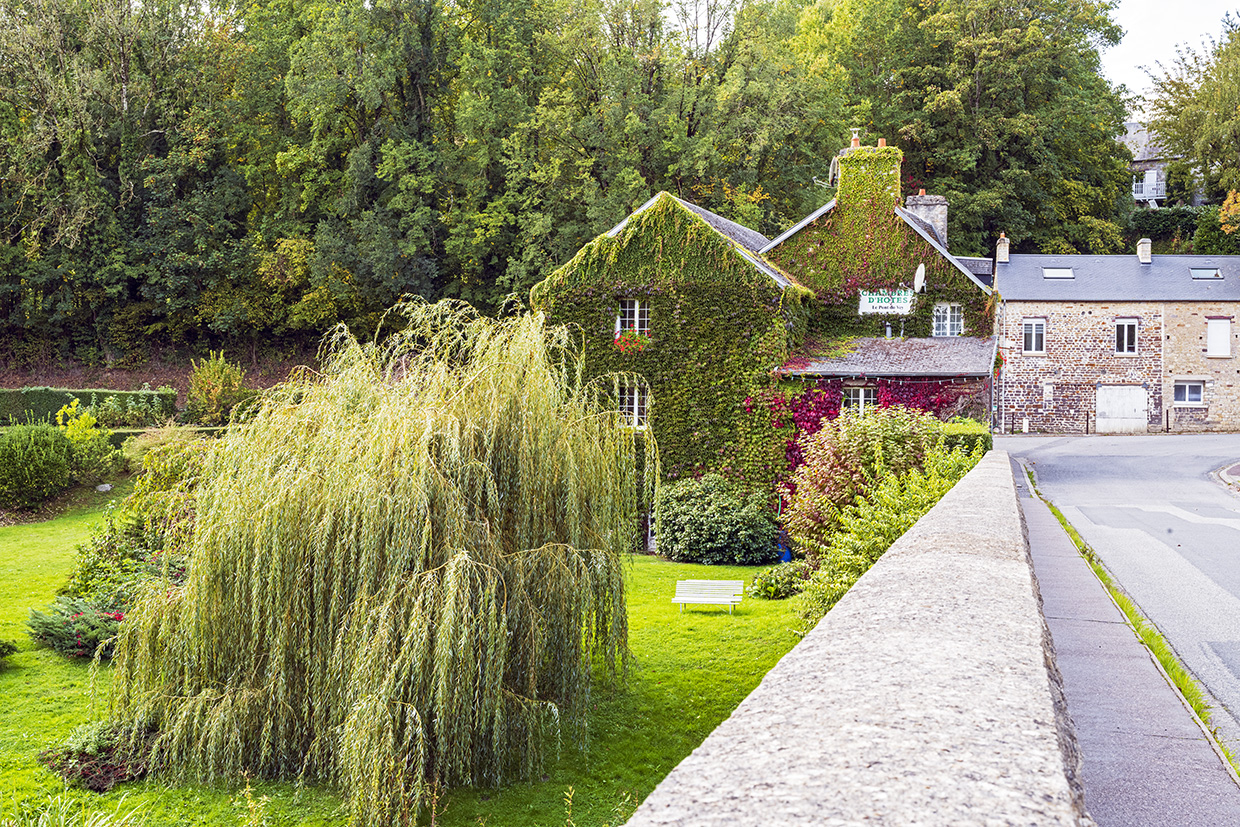
Small stone houses.
A pace that feels gentle and grounded.
I didn’t go in with sky-high expectations — which is kind of my M.O.
But Normandy completely won me over.
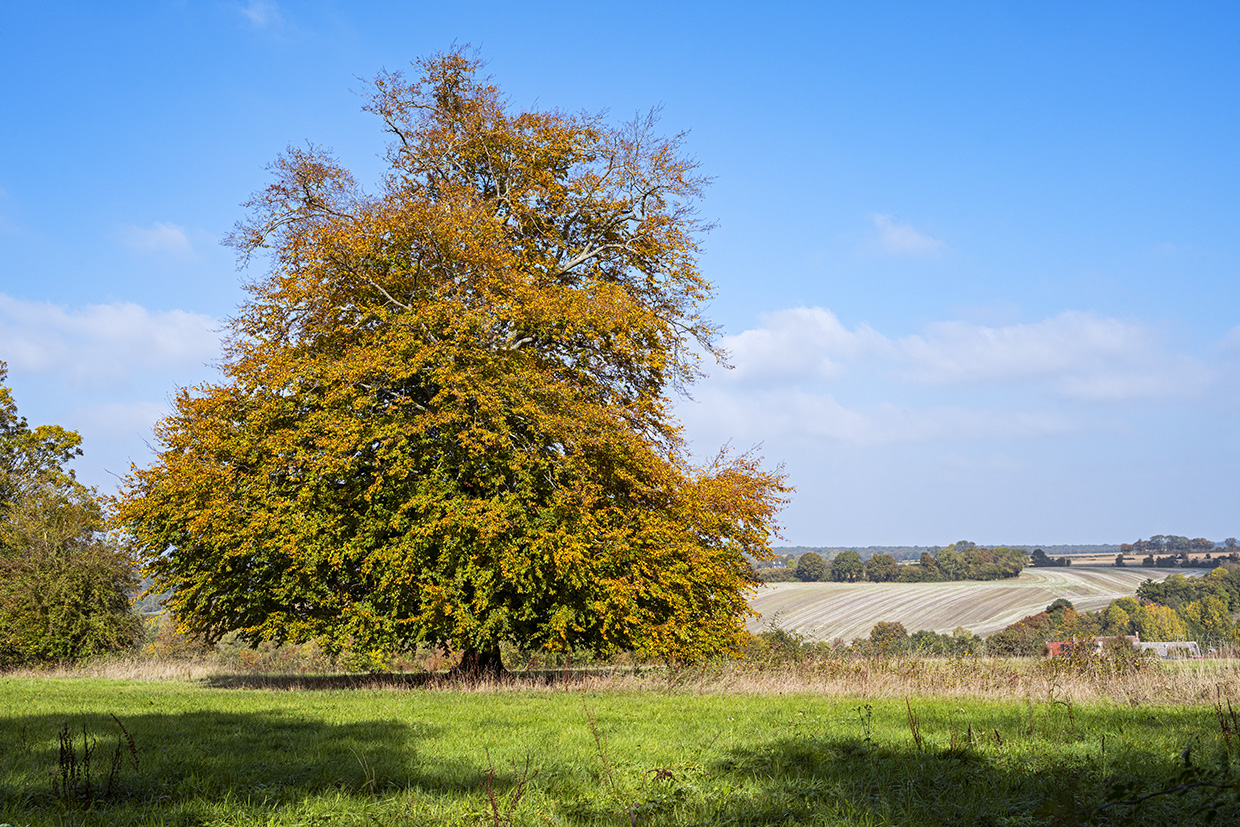
The countryside is fertile and green, dotted with cows and sheep.
And in October I caught the beginning of fall color too.
It felt like a place made for slow travel.
Espins and surrounds
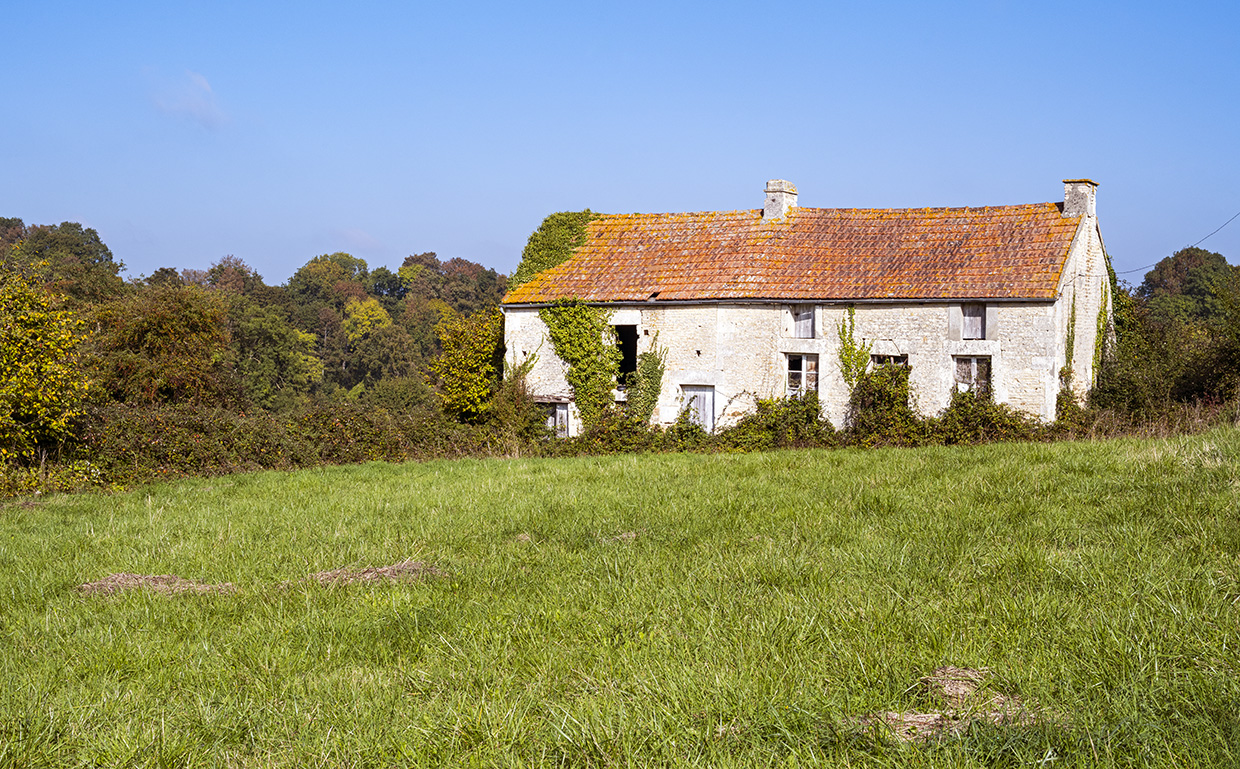
I stayed in a very small village called Espins, south of Caen.
It is more a settlement than a town as it had a church and cemetery and not much else aside from people’s homes.
The closest larger town for shopping was Thury-Harcourt (hello, Super U—my favorite kind of travel errand).
My Airbnb hosts were a lovely British couple who had renovated self-catering spaces on an old farm property.
Quiet, comfortable, and set up perfectly for countryside wandering.
What I loved most was stepping outside and immediately having access to quiet rural roads with hardly any traffic, farm tracks and loops through fields and trees and that peaceful “I can actually hear myself think” feeling.
Suisse Normande
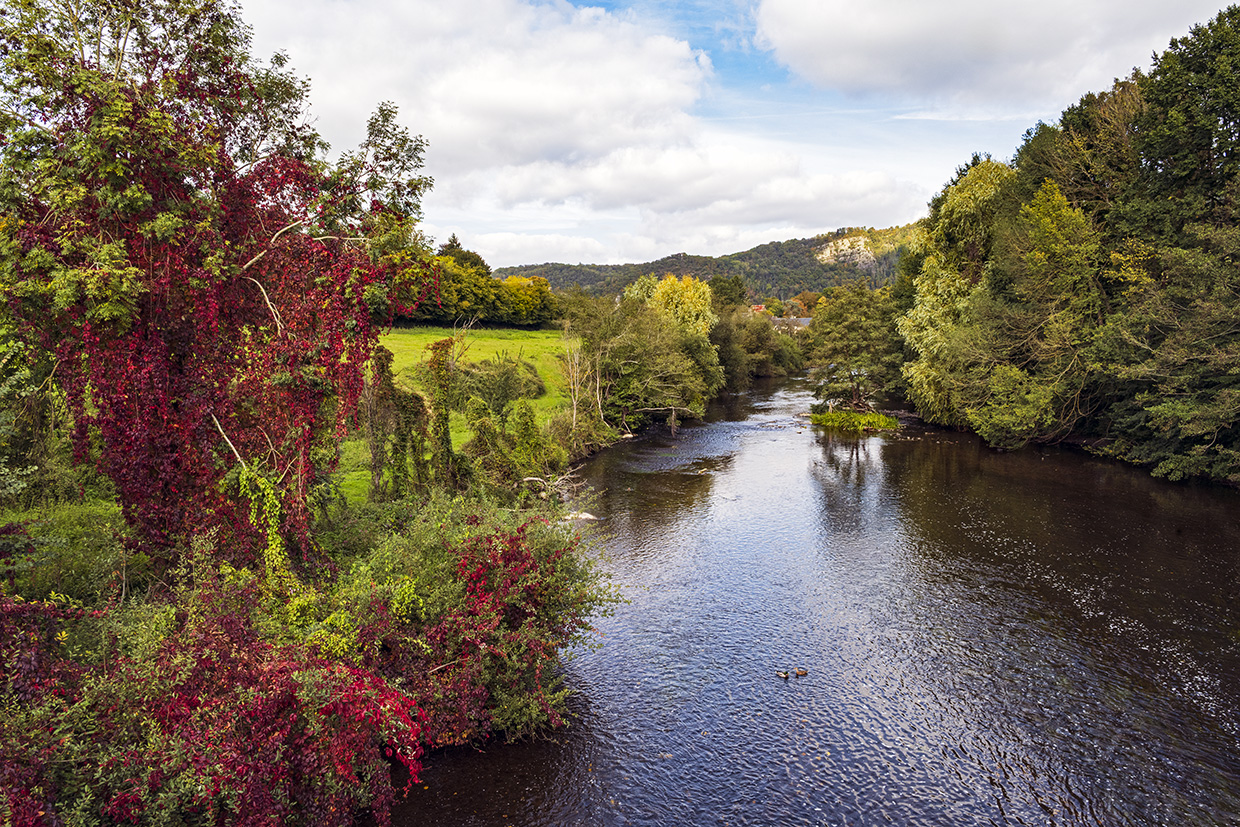
One reason I chose to stay in the area around Espins was because it put me close to Suisse Normande—a region known for its natural beauty and outdoor activities.
The Orne River runs through it.
And it’s an area where you’ll find hiking trails, kayaking/canoeing opportunities, cycling routes, horse riding and even some rock climbing.
Even if you’re not there for full-on adventure, it’s a gorgeous area to drive through and explore.
Clécy ❤️
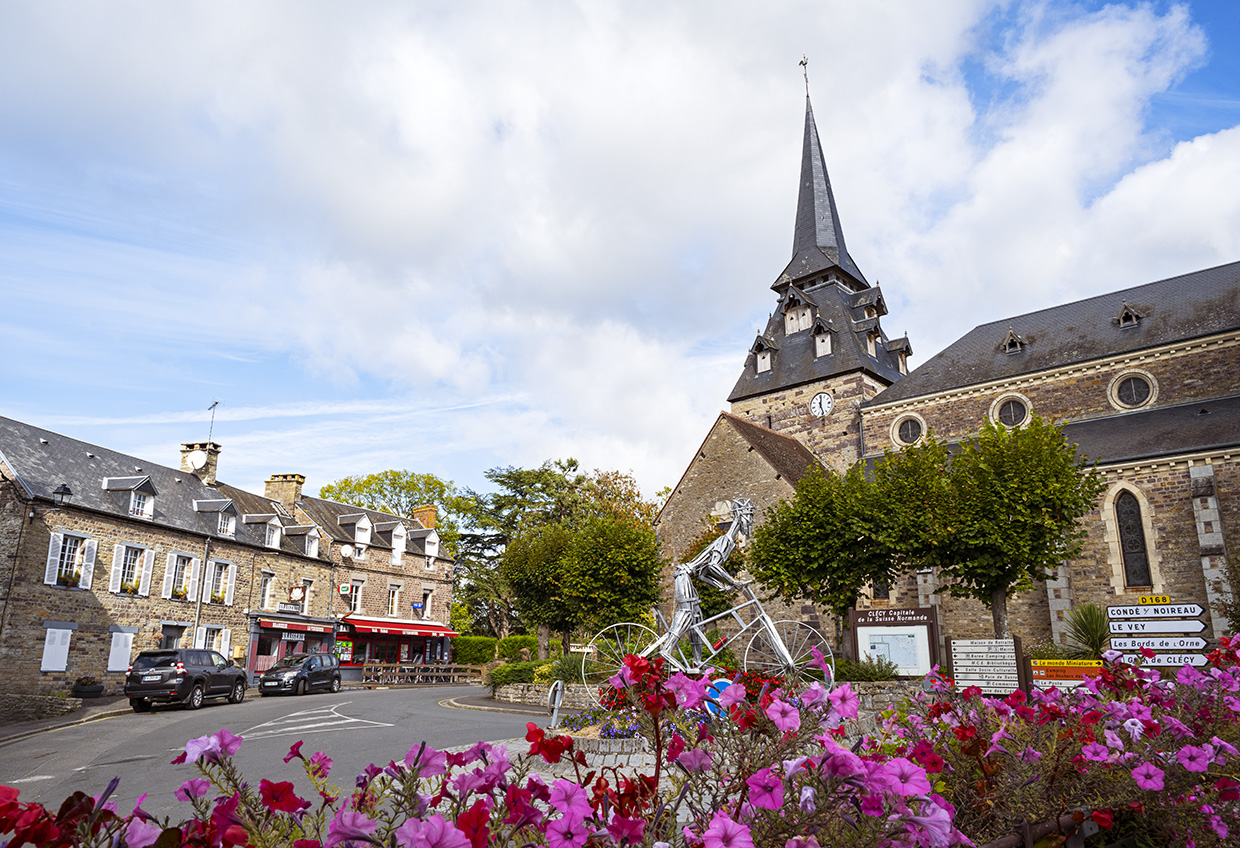
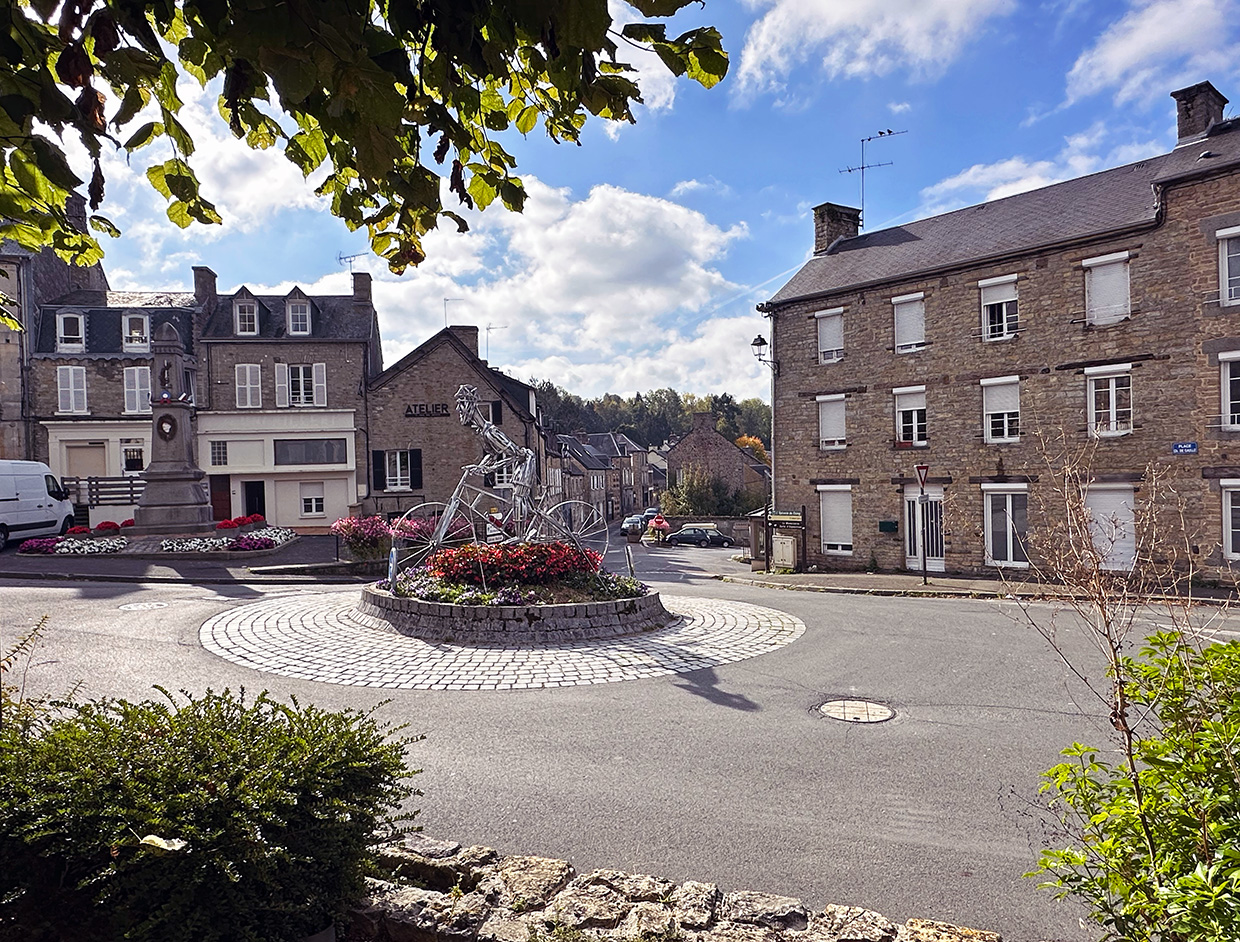
One of my favorite stops was Clécy, a small village right in Suisse Normande.
It was quiet when I visited (mid-October, midweek).
But the setting is beautiful — overlooks, river views, and a lovely “summer would be buzzing here” vibe.
I walked around town, visited the church, crossed a bridge over the river, and wandered slowly—exactly the kind of travel moment I love.
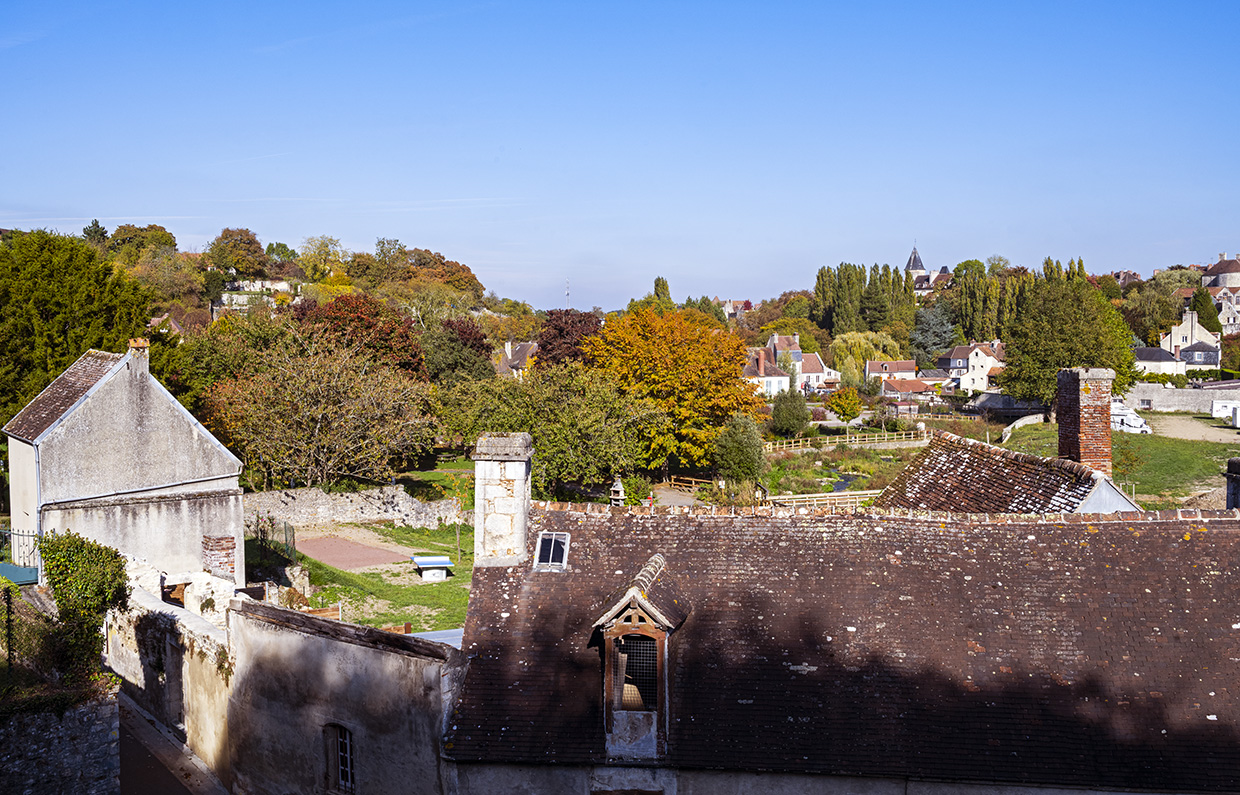
Falaise
Another place I highly recommend is Falaise.
It’s not quite in the Suisse Normande, but on the edge.
Falaise is bigger than Clécy, lively, and full of interesting things to do.
I visited on a Saturday morning and caught the weekly market which is fabulous.
It had everything — produce, seafood, meats, cheeses, crafts, clothing … and lots of locals greeting each other like it was the best kind of weekly ritual.
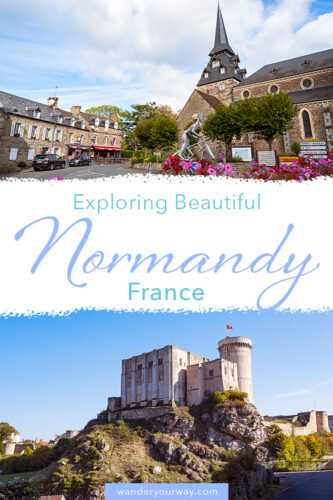
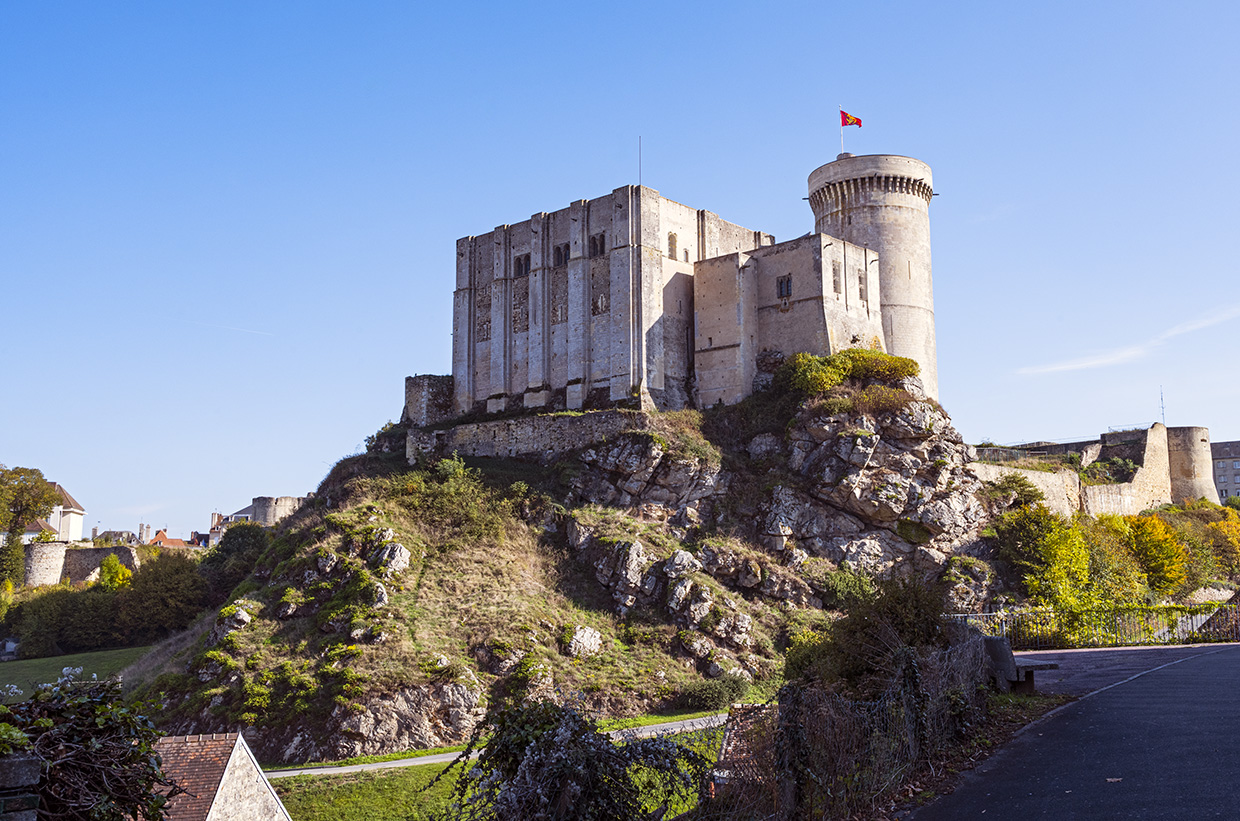
In Falaise, I recommend visiting the Falaise Castle.
This is a fortress-style Norman castle, not a “pretty palace”.
And it’s historically significant as this is where William the Conqueror was born. (If you don’t know who he is, he is the man who goes to England and well, conquers England thus making it into what it is now).
It’s well interpreted and worth visiting if you enjoy medieval history and great views.
I also recommend the Memorial to Civilians in Wartime
This museum— focused on civilians during WWII — was one of the most sobering and meaningful places I visited.
It tells the story of what life was like for people living in Normandy before the occupation, under German control. and during the fighting after D-Day.
It’s deeply moving and very well done.
Just be prepared for it to be heavy.
Also I recommend Église Saint-Gervais-Saint-Protais de Falaise.
There are a few churches in Falaise.
This was the Gothic style one I visited.
You know me, I always say to go into the churches!
Final thoughts on Normandy France
Normandy has history that deserves time and attention.
There’s no doubt about that.
But what surprised me most was how much Normandy offers beyond the beaches — charming villages and market towns, rural landscapes that feel restorative, food culture rooted in dairy, apples, and the sea, and outdoor options like rivers, trails, and scenic drives.
I have to give a special shout-out to the people.
I found Normans genuinely warm and welcoming.
There’s a deep respect for the history here.
And a sense that the story of liberation has been passed down — something you can still feel.
If you’re looking for a place in France where you can slow down, learn something meaningful, and still eat extremely well, Normandy is a fantastic choice.
And compared to some of France’s more famous regions, it can feel more budget-friendly.
If Normandy is on your list only for the D-Day beaches, keep it there.
But don’t let it stop there.
Give yourself the gift of a few extra days in this region.
Do the beaches with a guide.
Walk a second beach on your own at low tide.
Spend time in Bayeux.
Then head inland.
Visit Clécy, wander Suisse Normande, explore Falaise, linger at a market, and take the kind of slow countryside walk that makes you fall in love with travel all over again.
Normandy isn’t just a history destination.
It’s a region with heart — layered, beautiful, and quietly unforgettable.
Disclaimer: This post contains affiliate links. This means I will earn a commission – at no extra cost to you — if you click on the link and purchase anything from these trusted companies. It helps Wander Your Way, a small business, stay in business. Thanks for your support!
Like it? Pin it!