
Language Tips for More Meaningful Travel with Margherita Berti
Do you learn a few words of the local language before traveling to another country?
Even knowing how to say hello, please and thank you can make a difference.
But learning a little more can open the door to deeper connections with the people you meet along the way.
In this episode, I’m joined by Margherita Berti, founder of Italian Matters, to talk about how learning and using the local language can lead to a more meaningful travel experience.
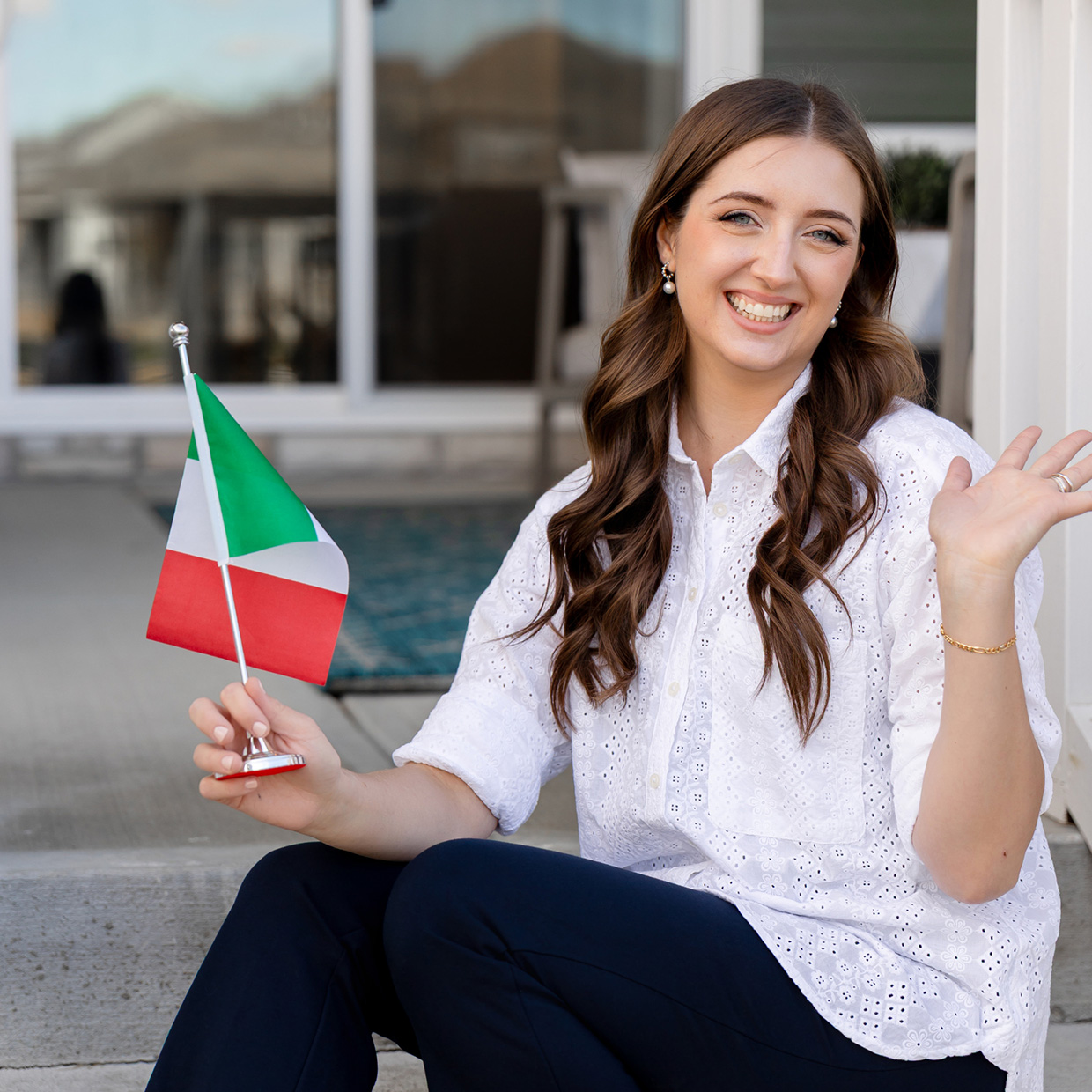
Margherita grew up in Bergamo, Italy, and has spent years studying languages, linguistics and how we actually learn to communicate in another language.
She shares practical tips for learning before you travel, from flashcards and podcasts to music, movies and the shadowing technique.
We also talk about which words and phrases are most useful, why it helps to prepare for situations you know you’ll encounter, and how to get past the fear of making a mistake and actually speak the language once you’re there.
Because you don’t need to be fluent.
And you definitely don’t need to be perfect.
Sometimes simply making the effort to speak a few words in the local language can create a connection — and become one of those moments you remember long after the trip is over.
Want to chat more about this topic?
Email me at Lynne@WanderYourWay.com
In this episode:
1:10: Intro
1:53: About Margherita Berti
4:02: Italy to Indiana
10:24: Various learning tools
16:04: Key phrases to learn
18:01: Understanding creates connection
19:40: Using translating apps
22:51: Teaching English speakers
27:31: Advice for confident speaking
33:44: Margherita’s final tips & thoughts
36:18: Lynne’s final tips & thoughts
41:10: Wrapping it up



Language Tips for More Meaningful Travel with Margherita Berti
(For those who prefer to read)
Learning a few words of the local language is something I always recommend before traveling to another country.
You don’t need to be fluent.
You don’t even need to be particularly good.
But knowing a few words and phrases can make traveling a wee bit easier.
More importantly, making an effort to speak the local language can help you connect with the people you meet along the way.
And isn’t that one of the reasons we travel?
Margherita Berti knows a thing or two about learning languages.
Born and raised in Bergamo in northern Italy, Margherita has a PhD in applied linguistics and is the founder of Italian Matters, an online language school where she teaches Italian to English speakers.
Her approach isn’t simply about memorizing a list of phrases.
It’s about understanding some of the building blocks of a language so you can actually put words together and communicate.
And many of her tips can help you whether you’re learning Italian, French, Spanish, German or another language for your next trip.
Start with words you’ll actually use
You don’t need to learn hundreds of words before traveling.
Start with the basics.
Margherita recommends learning question words such as where, how and when, along with greetings and polite words such as please, thank you and you’re welcome.
Then think about what you’ll actually be doing during your trip.
Going to restaurants?
Learn some words and phrases you’ll need when ordering.
Visiting museums?
Practice how to ask for tickets.
Taking the train?
Learn some transportation-related words.
This is one of Margherita’s best pieces of advice— prepare for the situations you know you’re going to encounter.
It makes learning the language more manageable and gives you something practical to work toward.

Find ways to practice before you travel
Flashcards may feel old-school, but they work.
Margherita recommends creating your own flashcards with the words and phrases you want to learn.
You can use actual paper cards or an app such as Quizlet.
But don’t stop with memorizing words.
Listen to podcasts in the language you’re learning.
Watch movies.
Listen to music and follow along with the lyrics.
Margherita also recommends a technique called shadowing, where you listen to a native speaker while reading the words and speaking along with them.
It’s a way to get used to hearing the language while also training your mouth to make sounds it may not normally make.
And yes, sometimes your mouth needs a little training!

Don’t be afraid to speak
This might be the most important language tip of all.
Use what you’ve learned.
I know this can be intimidating.
What if you pronounce something incorrectly?
What if you use the wrong word?
What if the person doesn’t understand you?
Try anyway.
As Margherita points out, preparation can help you feel more confident.
And if you need your notes or flashcards while you’re traveling, use them.
There’s no rule saying you have to do this from memory.
You can also ask someone to help you with a word or correct your pronunciation.
That’s another opportunity to interact with a local person — and maybe learn something along the way.
You don’t have to speak perfectly
I’ve certainly stumbled over words when I’ve traveled.
My French is especially questionable!
But here’s something worth remembering — the person you’re speaking with may also know what it’s like to learn another language.
And most people aren’t expecting you to speak their language perfectly.
You’re trying.
And that effort matters.
You might mispronounce something.
Someone might correct you.
You may even end up laughing together over whatever just came out of your mouth.
That’s okay.
These little interactions often become part of your travel experience — and long lasting memories

Final thoughts on language tips for travel
Technology certainly makes communicating while traveling easier.
Translation apps can be incredibly helpful when you get stuck.
But they can’t completely replace making the effort to learn and speak a little of the local language yourself.
You don’t have to become fluent before your trip.
Learn some basic building blocks.
Practice words you’ll actually use.
Listen to the language as much as you can.
Then when you arrive, take a chance and speak.
Because travel isn’t just about seeing a place.
It’s about connecting with it.
And sometimes a simple buongiorno, bonjour, hola or guten tag is where that connection begins.
Disclaimer: This post contains affiliate links. This means I will earn a commission – at no extra cost to you — if you click on the link and purchase anything from these trusted companies. It helps Wander Your Way, a small business, stay in business. Thanks for your support!
Like it? Pin it!